

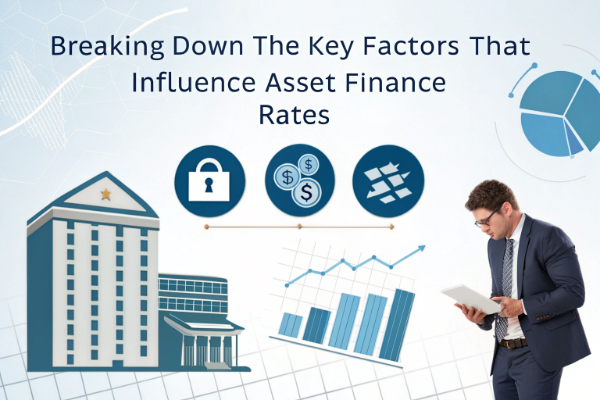
Breaking Down the Key Factors That Influence Asset Finance Rates
When your business is exploring ways to acquire essential equipment, vehicles or machinery, understanding what impacts asset finance rates can save you money and help you plan more effectively. Whether you’re a start‑up owner or an experienced financial decision‑maker, clarity on these key drivers is essential when hunting for the best asset finance rates.
Asset finance is now a vital source of funding for UK businesses, the sector saw significant growth recently, with new business up by double figures, demonstrating just how many companies are choosing this option to invest in growth.
1. The Bank of England base rate
One of the biggest influences on asset finance pricing is the Bank of England base rate. This is the benchmark that underpins borrowing costs across the UK economy, and when it goes up or down, it generally affects the cost of credit for lenders, including those offering business asset finance.
This means that when base rates are relatively low, lenders can offer more competitive deals. In practice, that might translate to lower monthly payments if you’re leasing equipment via a hire purchase or finance lease agreement.
2. Your business’ financial health
Lenders don’t make decisions purely on the macroeconomic environment, they also look closely at your business:
- Credit profile and history: A strong credit score and solid financial statements often unlock lower interest margins.
- Cash flow stability: Businesses with consistent revenue and healthy cash flow pose less risk, which can positively affect your quote.
It’s why reviewing your accounts before applying, and even checking your credit report, can help you improve your negotiating position before you start comparing deals.
3. Type and value of the asset
Not all assets are treated equally:
- Resale value matters. Assets that hold their value well, think specialised commercial vehicles or high‑quality machinery, often come with more favourable rates.
- Asset category also plays a role. Some lenders price soft assets (like technology equipment) differently to hard assets (like heavy machinery), because of depreciation and recovery risk.
The underlying reason? The asset itself typically secures the finance agreement. If the asset retains value, the lender’s risk is lower, and their price often follows suit.
4. Term length and structure
How long you take to repay your finance impacts the cost:
- Shorter terms usually mean higher monthly repayments but less interest overall.
- Longer terms reduce monthly strain but increase the total amount you pay in interest across the life of the contract.
Working this out properly is where an asset finance calculator becomes invaluable. Tools like these allow you to test different terms and rates so you can anticipate monthly commitments before you start formal discussions with lenders.
5. Market competition and liquidity
The wider lending market influences the rates you’re offered:
- Competition among lenders tends to push prices down as firms compete for business.
- Market liquidity: The availability of funds in the financial system, also matters. When there’s plenty of lending capacity, rates tend to be more competitive.
In recent months, with lenders actively rebuilding volumes and appetite for business lending, this competitive pressure has worked in favour of borrowers.
6. Fees and additional costs
Interest rates aren’t the whole story, fees also affect the real cost of your finance.
Be sure to consider:
- Arrangement or set‑up charges
- Early repayment penalties
- Valuation or legal fees
These can add up and make an otherwise attractive headline rate less competitive. Always compare APR, which bundles these factors, rather than just the nominal interest rate.
Final thoughts
Understanding the forces that shape asset finance rates empowers you to make smarter decisions when seeking business asset finance. From economic benchmarks like the base rate to business‑specific factors like creditworthiness and asset quality, a mix of macro and micro elements determines the final offer you receive.
Before signing a deal:
- Use an asset finance calculator to model options.
- Shop around to find the best asset finance rates compatible with your business and repayment goals.
- Factor in terms, fees and repayment flexibility, not just headline numbers.
With clear planning and informed comparison, asset finance can be a powerful tool to grow and modernise your business while preserving valuable working capital.
Recent Posts

What Does a Commercial Finance Broker Do?
March 5, 2026

Can I Borrow Money to Open a Business? A Practical UK Guide
February 25, 2026
Merchant Finance Loan Requirements: What UK Businesses Need to Know
February 24, 2026

Categories
- Asset Finance (14)
- Business Loans (10)
- Commercial Finance (11)
- Construction Finance (6)
- Finance (4)
- Franchise Finance (3)
- Invoice Finance (12)
- Merchant Finance (20)
- Trade Finance (2)
- Unsecured Loans (4)


 21 Rotherwick Road, London, NW11 7DG


